
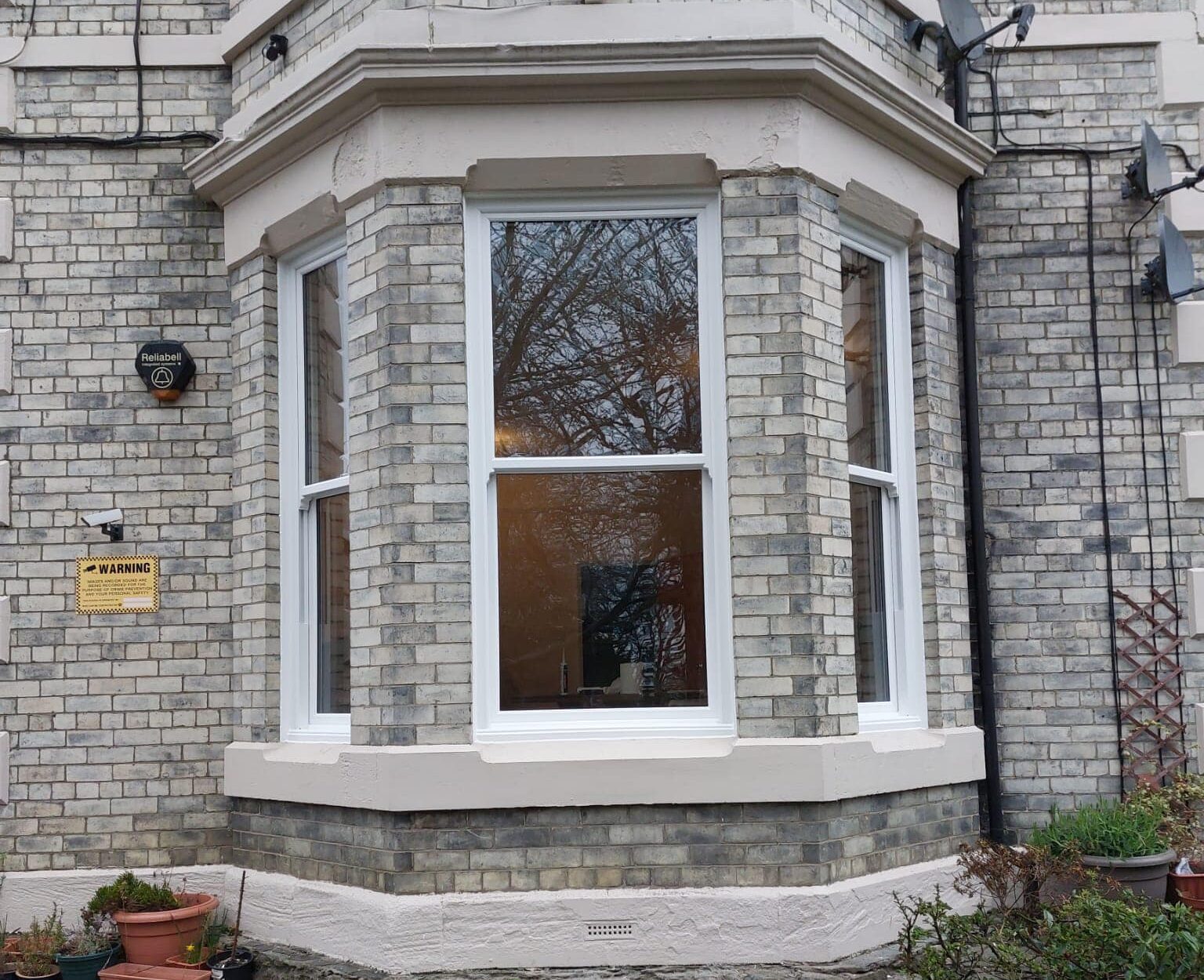
A bow bay window comparison is often the starting point for homeowners looking to enhance space, light, and kerb appeal at their property.
While both these window styles project outward and add character, each offers distinct benefits. So, your own decision between them will greatly depend on your specific home and goals.
Understanding the distinctions between these types of window will help you make a confident, long-term choice that delivers both the look and performance you desire.
Bow Bay Window Comparison: Understanding the Core Differences
Although people often talk about these window types as if they were interchangeable, bay and bow windows differ in structure and appearance.
What Is a Bay Window?
Bay windows usually feature three panels. A large central window sits between two angled side windows. This design creates a bold, architectural look that suits period and traditional homes.
Bay windows often provide strong sightlines and allow for practical additions such as window seats or storage underneath.
What Is a Bow Window?
Bow windows curve gently outward using four or more panels. The result feels softer and more elegant than a bay window.
This style suits homes that benefit from a smoother façade and increased natural light across a wider angle.
Bow Bay Window Comparison: Light, Space, and Views
Both designs increase daylight, but they affect space differently.
Bay windows create a defined internal area. This makes them ideal for dining nooks, reading corners, or feature seating. The angles also provide a structured view outside.
Bow windows spread light more evenly. Their curved shape draws daylight from multiple directions, creating a brighter and more open feel. Many homeowners choose bows for living rooms or front-facing elevations.
The size of your room will likely influence your choice. Smaller rooms often benefit from the softer projection of a bow window, whereas larger spaces tend to handle the bold geometry of a bay well.
Bow Bay Window Comparison: Style, Property Type, and Planning
Matching your choice of window to your property’s aesthetics will greatly help improve visual balance and long-term value.
Bay windows are a good complement to Victorian, Edwardian, and traditional homes. They reinforce symmetry and architectural detail.
Bow windows, meanwhile, typically suit modern, coastal, or contemporary properties. Their curve softens sharp lines and adds elegance without overpowering the façade.
Planning considerations may apply. Both styles project outward, so it would be a sensible course of action to check local requirements. A professional installer can advise and guide you in relation to this process.
Performance Matters More Than Shape
Whichever window style you choose, performance should lead the decision. Energy efficiency, security, and build quality affect comfort far more than appearance alone.
Here at Etheridge Windows, every installation benefits from free triple glazing as standard. This improves thermal performance, reduces noise, and enhances security.
Importantly, a made to measure window ensures the perfect fit for any bay or bow design. Precision manufacturing greatly helps to eliminate gaps, improve insulation, and ensure clean internal finishes.
Choosing Between Bay and Bow Windows
A clear bow bay window comparison shows that neither option is universally “better”. The right choice for you and your property will depend on your space, style, and how you plan to use the given room.
Bay windows deliver structure and presence, while bow windows are known for the softness and light they provide. Both can transform a home when designed and installed correctly.
For expert advice and to take advantage of our free triple glazing offer, please don’t hesitate to turn to the Etheridge Windows team. We can help you choose a solution that looks right and performs for decades.
Check out our other blogs
Should You Replace All Your Windows at Once?
Every home is different. Some properties only need a handful of windows replacing, while others benefit from a full refurbishment.

Why Do Modern Windows Keep Homes Warmer?
If you've ever stood next to an old window on a cold day, you've probably noticed the difference straight away. Older windows often let heat escape, create draughts and leave rooms feeling colder than the rest of the house. Modern windows are designed very differently. Thanks to improvements in glazing, frames and seals, they're much better at keeping warmth inside and cold air out. Here's how they work.
Your EPC Rating Explained: Why Windows Matter More Than You Realise
Energy Performance Certificates (EPCs) can feel like jargon. But if you're selling your home, buying one, or simply curious about your property's efficiency, understanding your EPC rating matters far more than you might think. The good news? Windows play a bigger role than most homeowners realise, and upgrading them could make a real difference to both your bills and your home's market value.